Instagram Account Suspended: Complete Recovery Guide
Understand suspension vs disable vs ban and what to do about each.
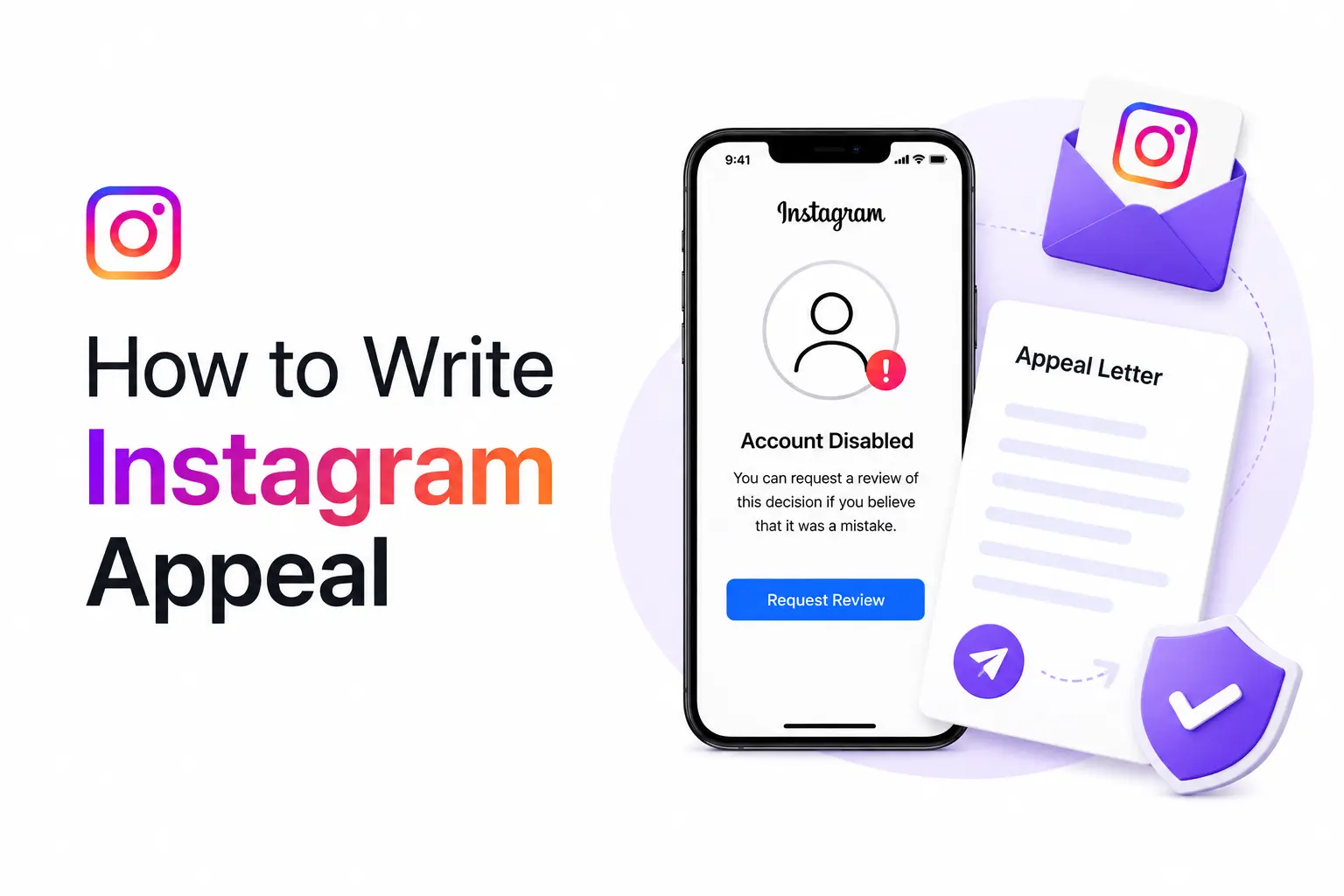
You're staring at a blank text box, trying to figure out what to write to get your Instagram account back. You know you only get one shot at this. The pressure is real.
Here's what most people don't get: Instagram appeals aren't about begging. They're not about explaining your whole life story. And they're definitely not about telling Instagram how terrible their system is (even if it is).
Think of it like this - you're talking to someone who reviews dozens of appeals every single day. They're tired. They're following a checklist. And they need specific information to do their job.
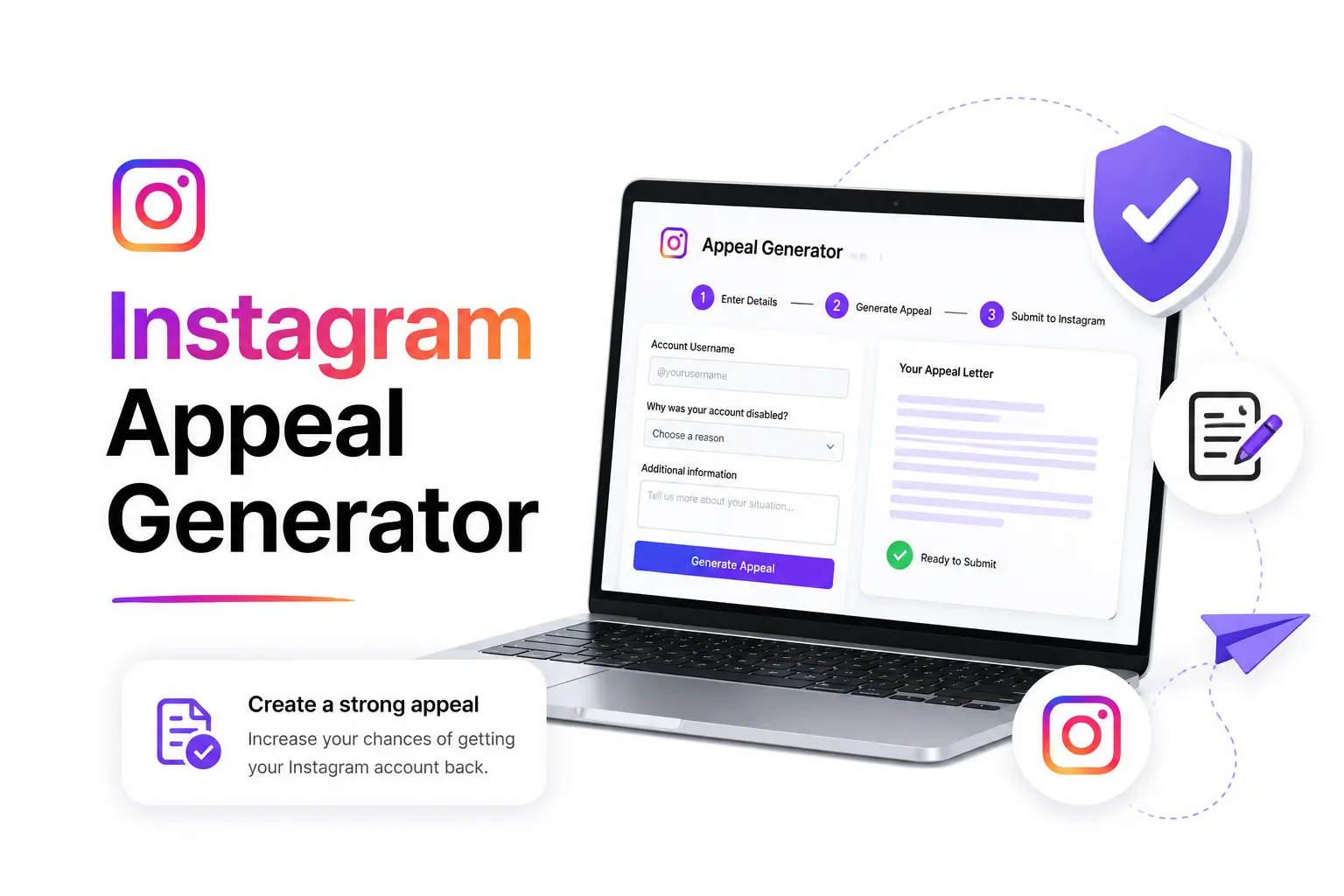
Let me show you exactly what works. Or skip the manual work and use our AI-powered appeal tool to generate a Meta-compliant appeal instantly.
Before you write a single word, understand who's reading your appeal and what they're looking for.
It's not a robot. Despite what people think, actual humans at Meta review appeals. But here's the thing - they're following guidelines and looking for specific elements. They're trained to spot certain red flags and green flags.
What they're checking for:
That's it. That's the mental checklist. Your appeal needs to answer these questions clearly and quickly.
Professional but human. Respectful but not groveling. Clear but not robotic.
Imagine you're explaining to a manager why you deserve a second chance at work. You wouldn't beg on your knees, but you wouldn't be arrogant either. You'd be honest, respectful, and show you understand what went wrong.
That's the vibe.
Write like you're talking to a reasonable person who has the power to help you, not like you're talking to a faceless corporation. Because you are talking to a person.
Your appeal needs these components. Non-negotiable. For ready-to-use examples, check our proven appeal templates.
Start with the basics. Make it easy for them to find your account and verify who you are.
Include:
Put this at the beginning or end. Don't bury it in the middle.
Explain what you think happened. Even if you don't know for sure, take your best guess based on the message you received.
Examples:
Be specific. Include dates if you have them.
This is where you explain what really happened. But here's the key - it's not about making excuses. It's about providing context that might not be obvious.
Good context:
Bad context (excuses):
This is the part most people skip, and it's why their appeals fail.
You need to show you understand Instagram's rules. If you violated something, acknowledge it professionally. If you didn't, acknowledge that you now understand why it might have been flagged.
If you clearly violated:
"I now understand that using third-party automation tools violates Instagram's terms of service. I've removed all such tools from my workflow."
If you didn't violate:
"I understand how my content might have triggered automated filters, and I'm happy to adjust my posting approach to avoid future confusion."
If you have no idea:
"I've reviewed Instagram's community guidelines and terms of service to better understand what might have caused this issue."
Briefly explain why your account is important. Keep it concise - one or two sentences max.
Good examples:
Don't write a sob story. Just state the facts.
End with a clear statement that you'll follow the guidelines going forward.
"I commit to ensuring all my future content and activity complies with Instagram's community guidelines and terms of service."
That's it. Simple and direct.
Our AI tool automatically includes all the essential elements in the perfect order. 130,000+ successful recoveries.
Generate My Appeal FreeLet me show you actual appeal examples. Names changed, but these are based on real cases.
Why this fails: Too emotional, no specific information, makes demands, threatens Instagram, all caps, no acknowledgment of rules, no actual details about the account.
Why this works: Professional tone, specific details, acknowledges potential issues, explains context, includes all necessary information, shows understanding of guidelines, commits to compliance.
Why this fails: No details, no explanation, no context, doesn't show understanding, way too short, no account information.
Why this works: Takes clear responsibility, explains exactly what happened, shows he fixed the issue, provides business context, commits to following rules, includes all details, professional but personal tone.
Here are proven templates you can adapt to your situation. Don't just copy-paste - customize with your specific details.
Answer a few questions and get a customized appeal that addresses your specific situation. No templates, just perfect appeals.
Try It FreeShort answer: 300-500 words is the sweet spot.
Too short (under 200 words) and you look like you don't care enough to explain. Too long (over 700 words) and the reviewer won't read it all.
Think of it this way: the reviewer should be able to read your entire appeal in 2-3 minutes and understand:
If you can't convey that in 500 words or less, you're including too much unnecessary information.
Getting the tone right is tricky. Too formal and you sound like a robot. Too casual and you sound unprofessional. Too emotional and you seem unstable.
Your appeal should read like you're writing to a colleague or manager - someone who deserves respect but also responds to human connection.
Good tone examples:
Bad tone examples:
I've seen thousands of failed appeals. Here are the top mistakes:
"My account got disabled for some reason" tells them nothing. Be specific: "My account was disabled on May 8th for 'spam behavior' which I believe relates to my increased posting frequency during a product launch."
How are they supposed to contact you or verify your identity if you don't give them your email and phone? Include this information clearly.
If you used a bot and you know you used a bot, don't say "I have no idea why this happened." They can see what you did. Acknowledge it and commit to change.
Nobody has time to read your 2,000-word manifesto about why Instagram is important to society. Keep it concise.
"I feel so hurt and betrayed" doesn't help your case. Stick to facts: what happened, why it matters, what you'll do differently.
"You MUST restore my account immediately" makes reviewers want to reject you on principle. You're asking for help, not demanding it.
Even if Instagram's algorithm made a mistake (which happens), telling them their system sucks doesn't help you. Focus on your case, not their technology.
Submitting without proofreading. Spelling errors, grammar mistakes, and typos make you look careless. If you can't take 2 minutes to proofread, why should they believe you'll follow guidelines?
Submit as soon as you're ready, but don't rush it. A good appeal submitted 6 hours after your disable is better than a bad appeal submitted immediately.
Take time to:
Waiting a few hours or even a day won't hurt your chances. But don't wait weeks - that signals you don't care that much.
You'll get an automated confirmation that your appeal was received. Then... nothing for a while.
Typical timeline:
Check the email you provided daily. When they respond, it'll be a simple email saying either "Your account has been restored" or "We reviewed your appeal and the disable stands."
Don't panic. You can appeal again.
Wait 48 hours, then:
Many successful recoveries happen on the second or third try. The key is adding new information each time, not just resubmitting the same appeal.
You now know more about writing Instagram appeals than 95% of people who try to recover their accounts. Here's what to do:
Or skip the stress and use an appeal generator that does all this automatically. Your call.
Our AI analyzes your situation and writes a perfect appeal in 60 seconds. 130,000+ successful recoveries prove it works.
Generate My Appeal NowGood luck. You've got this.
Include your username, email, phone number, a brief explanation of what happened, acknowledgment if you violated a rule (or understanding of why it was flagged), context for any misunderstandings, why the account matters, and commitment to follow guidelines. Keep it under 500 words with a professional but human tone.
300-500 words is ideal. Instagram reviewers read dozens of appeals daily and don't have time for essays. Be concise and specific - if you can say it in fewer words, do. Under 200 words looks like you don't care; over 700 words won't get fully read.
If you clearly violated a rule, yes - acknowledging it professionally shows maturity and understanding. Don't play dumb when Instagram can see what you did. If you genuinely didn't violate anything, explain the misunderstanding without being defensive. Saying "I now understand" works better than "I did nothing wrong."
Professional but human - think "business casual." Imagine explaining to a manager why you deserve a second chance. Be respectful and clear, but not robotic or groveling. Avoid begging, anger, or excessive formality. You're talking to a person with the power to help you, not a faceless corporation.
Yes, but customize it heavily with your specific details. Don't copy-paste generic templates. Instagram reviewers have seen the same templates hundreds of times. Use templates as structure guides, but make sure your appeal includes specific information about your account, situation, and why you deserve restoration.
Top mistakes: being too emotional or begging, making threats, being vague about what happened, not including contact information, writing essays that are too long, lying about obvious violations, focusing on feelings instead of facts, blaming Instagram's system, and not proofreading for errors.